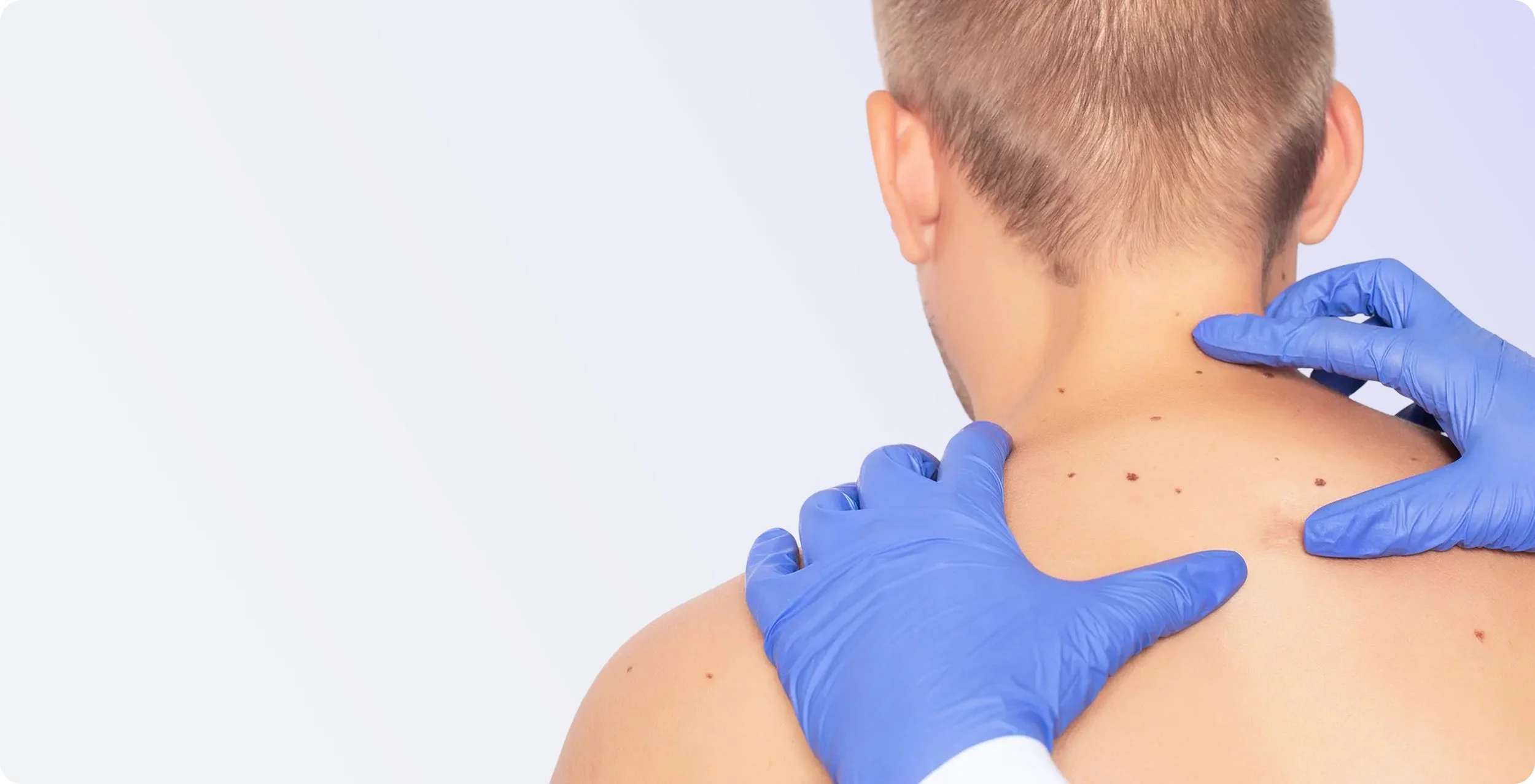
Skin Cancer
Learn about the most common types of skin cancer, early warning signs, and treatment options—including Mohs surgery—with guidance from Dr. Harvey.
About Skin Cancer
Skin cancer is the most common form of cancer in the U.S., affecting over two million people annually. Along with genetic predisposition and certain biological factors, e.g., a fair complexion, many freckles, a history of tanning beds and excessive sun exposure, and immunosuppression, these factors can increase the likelihood of developing skin cancer in your lifetime.
The main skin cancers in terms of their prevalence are:
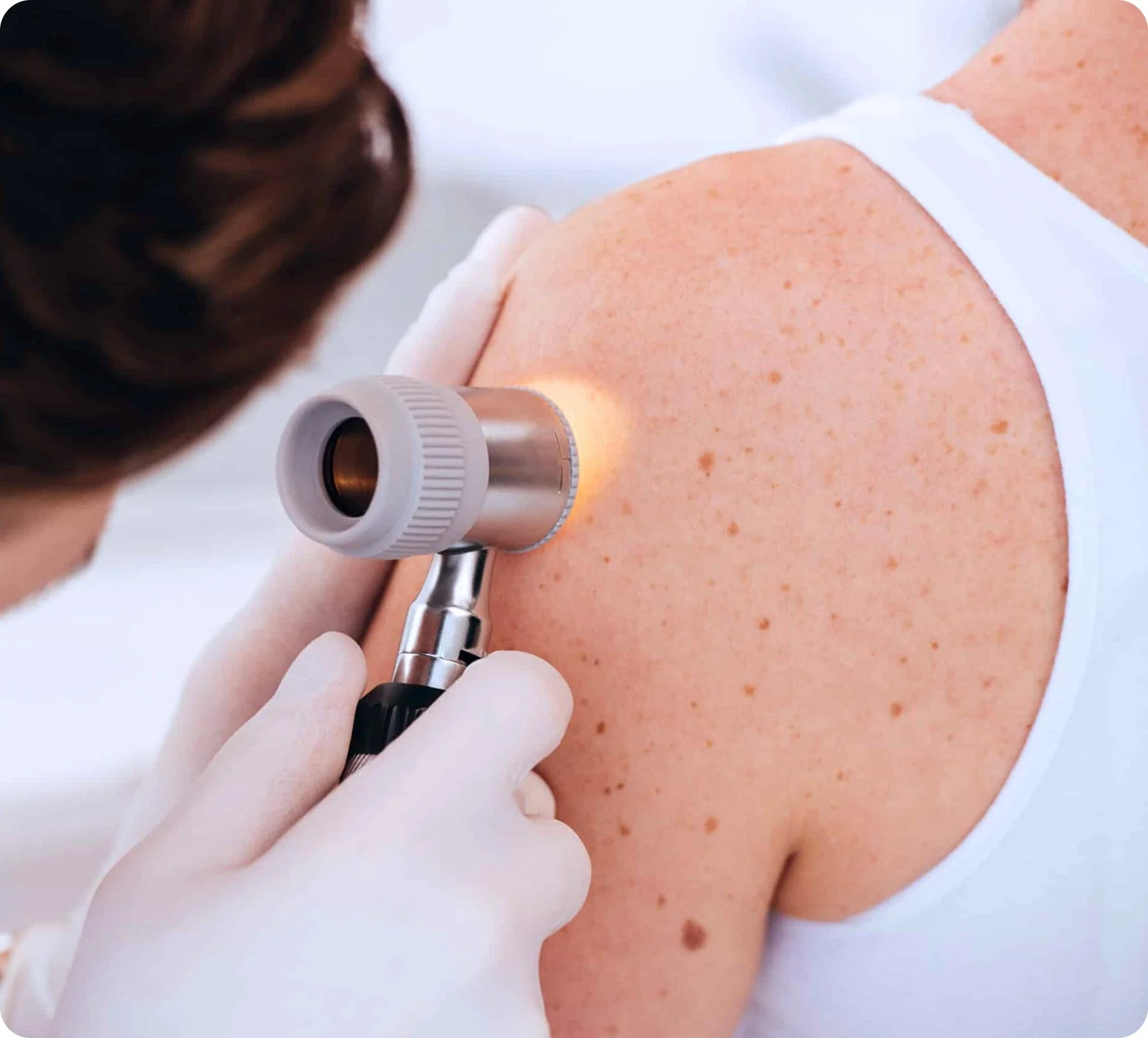
Basal Cell Carcinoma
Basal cell carcinoma can be a major health risk if not discovered and treated right away. This type of skin cancer can develop through too much exposure to UV rays.
Squamous Cell Carcinoma
Squamous Cell Carcinoma is a type of skin cancer that arises from the squamous cells in the outermost layer of the skin. These cells are responsible for the skin’s flexibility and protective qualities.
Malignant Melanoma
Malignant melanoma, often referred to simply as melanoma, is a type of skin cancer that originates from melanocytes, the pigment-producing cells in the skin.
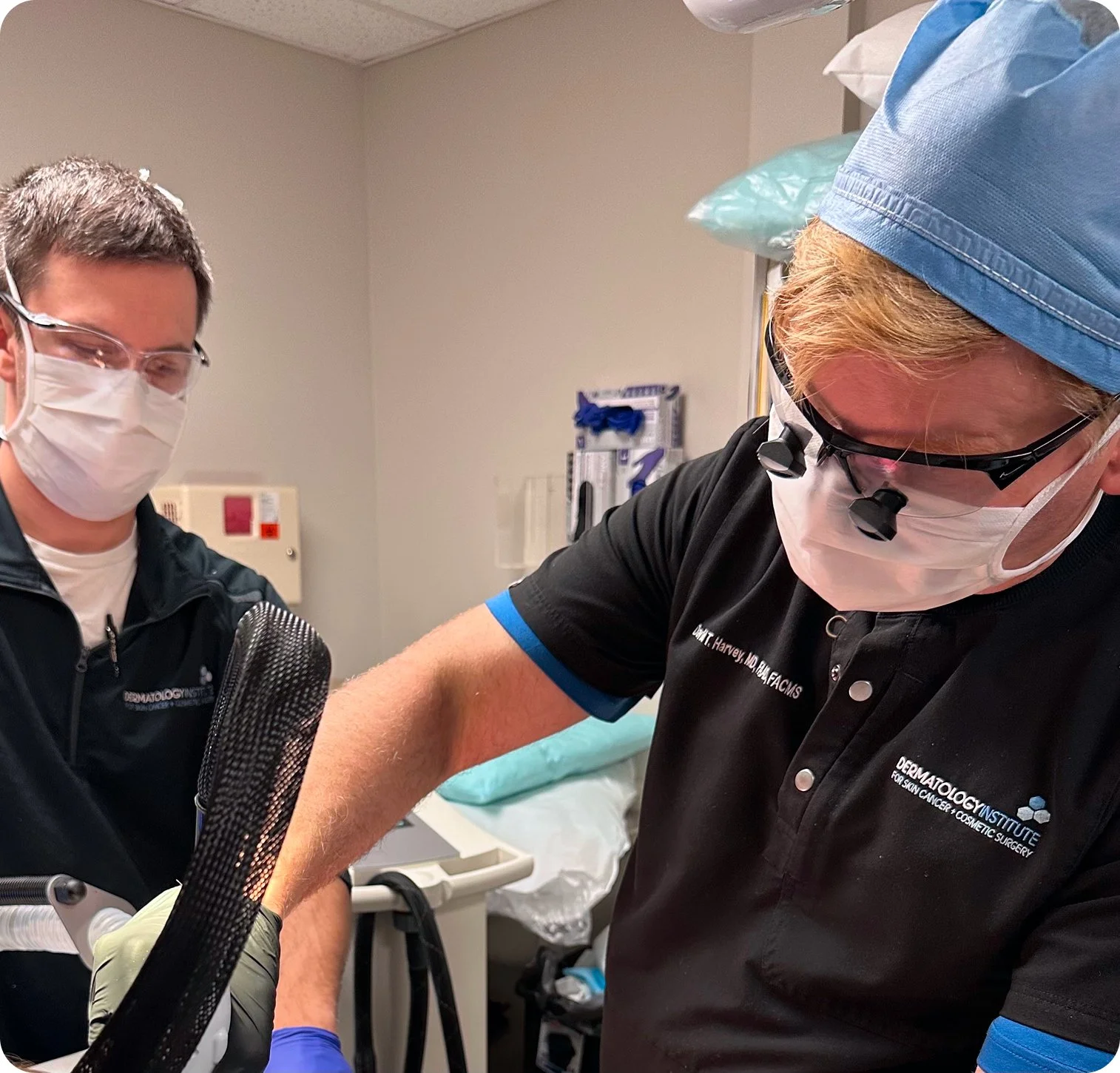
Mohs Surgery
While skin cancer can negatively impact your health and appearance, there are many effective treatment approaches, including Mohs surgery. With a success rate of 99 percent for certain tumors, Mohs surgery has the advantages of a high cure rate, tissue-sparing effects, and cost-effectiveness.
As a board-certified Micrographic Dermatologic Surgeon and fellow of the American Academy of Cosmetic Surgery, Dr. David Harvey will provide expert opinion on how to best address skin cancers from both a surgical and non-surgical perspective.
He will also be able to give some insights on the best options for cosmetic reconstruction if surgery is indeed needed.
Have Questions About Skin Cancer Care?
Schedule a consultation today to discuss treatment options, pricing, and next steps with Dr. Harvey.
-
Mohs surgery is a surgical technique for comprehensive skin cancer treatment. The procedure is unique because diagnostic information and curative response happen in real-time. It is an outpatient procedure performed under a local anesthetic. This specialized surgery is performed by medical professionals who have undergone very extensive fellowship training at a Mohs-accredited surgical program.
-
The curative success of Mohs surgery for skin cancer stems from the removal of every last unhealthy cell. This highly specialized surgical procedure removes single layers of skin tissue for microscopic examination to map the presence of cancer cells. This process continues until reaching a layer that is free from cancerous cells. This methodical technique saves as much healthy skin as possible.
After cancer removal, a wound or gap may be present. This can be addressed with the help of a skin reconstruction procedure, which often involves flap or graft techniques.
-
Dr. Frederic Mohs pioneered this micrographic surgical technique in the 1930s during his time as a professor of surgery at the University of Wisconsin. This specialized technique is also referred to as micrographic surgery or Mohs micrographic surgery.
-
Patients commonly feel minimal discomfort, if any, during the procedure. Localized numbing from a tiny injection of anesthetic in the treatment area does an excellent job of keeping patients comfortable and pain-free. Minor discomfort after surgery is well managed with rest, ice, elevation, and ibuprofen or acetaminophen. If prescription-strength pain medication is appropriate for the patient and needed, it will be prescribed.
-
Each skin tissue layer removed is considered a stage, with stage one being the raised portion and the lesion’s first underlying layer and surrounding margins. For most patients, one or two additional stages are needed. In some cases, cancerous lesions can have extensions or roots not visible at the surface, so the Mohs surgeon will continue the process until the examination confirms 100% cancer-free margins.
-
After Mohs surgery, patients are encouraged to rest. Specific instructions for aftercare are reviewed with patients before they leave their surgical appointment.
Ice packs applied for 20 minutes once an hour until bedtime will relieve discomfort and help reduce swelling. To minimize the duration or occurrence of minor bleeding, bruising, or the opening of the wound, keep the treatment area elevated. Strenuous activity and lifting must be avoided for one to two weeks.
Common Questions about Mohs Surgery
If you have a specific question or concern you would like to discuss with Dr. Harvey, please feel free to reach out at:
Featured Podcasts & Videos
You can explore related podcasts and videos on The Derm Café, where Dr. Harvey discusses cosmetic dermatologic procedures, treatment options, and what to expect before and after your consultation.

Scar Massage
A brief overview of how to perform scar massage after your surgery with Dr. Dave Harvey

Mohs Surgery
Dr. David Harvey explains Mohs Surgery procedure.

Mohs Surgery
Mohs micrographic surgery is the most effective and advanced treatment for skin cancer.